Objective
The objective of the Hospital Dataset Analysis project is to examine and derive insights from the dataset pertaining to hospital records. Through comprehensive analysis, we aim to identify patterns, trends, and correlations within the data, thereby providing valuable insights for healthcare professionals and policymakers to optimize hospital operations, improve patient care, and enhance overall efficiency within the healthcare system.
Motivation
The motivation behind the Hospital Dataset Analysis project lies in the necessity to leverage data-driven approaches for improving healthcare outcomes. By analyzing hospital datasets, we can uncover valuable insights that contribute to more informed decision-making processes. These insights have the potential to drive enhancements in various aspects of hospital management, including resource allocation, patient treatment protocols, and operational efficiency.
Dataset: Hospital Dataset
The dataset contains details about the patient’s demographics and his condition when admitted to the ICU.
Methodology
- Data Cleaning:
- Cleaned the hospital data by removing/ imputing null values.
- Dropped columns that would not contribute to the analysis.
- Exploratory Data Analysis:
- Performed EDA to find trends and patterns in the data.
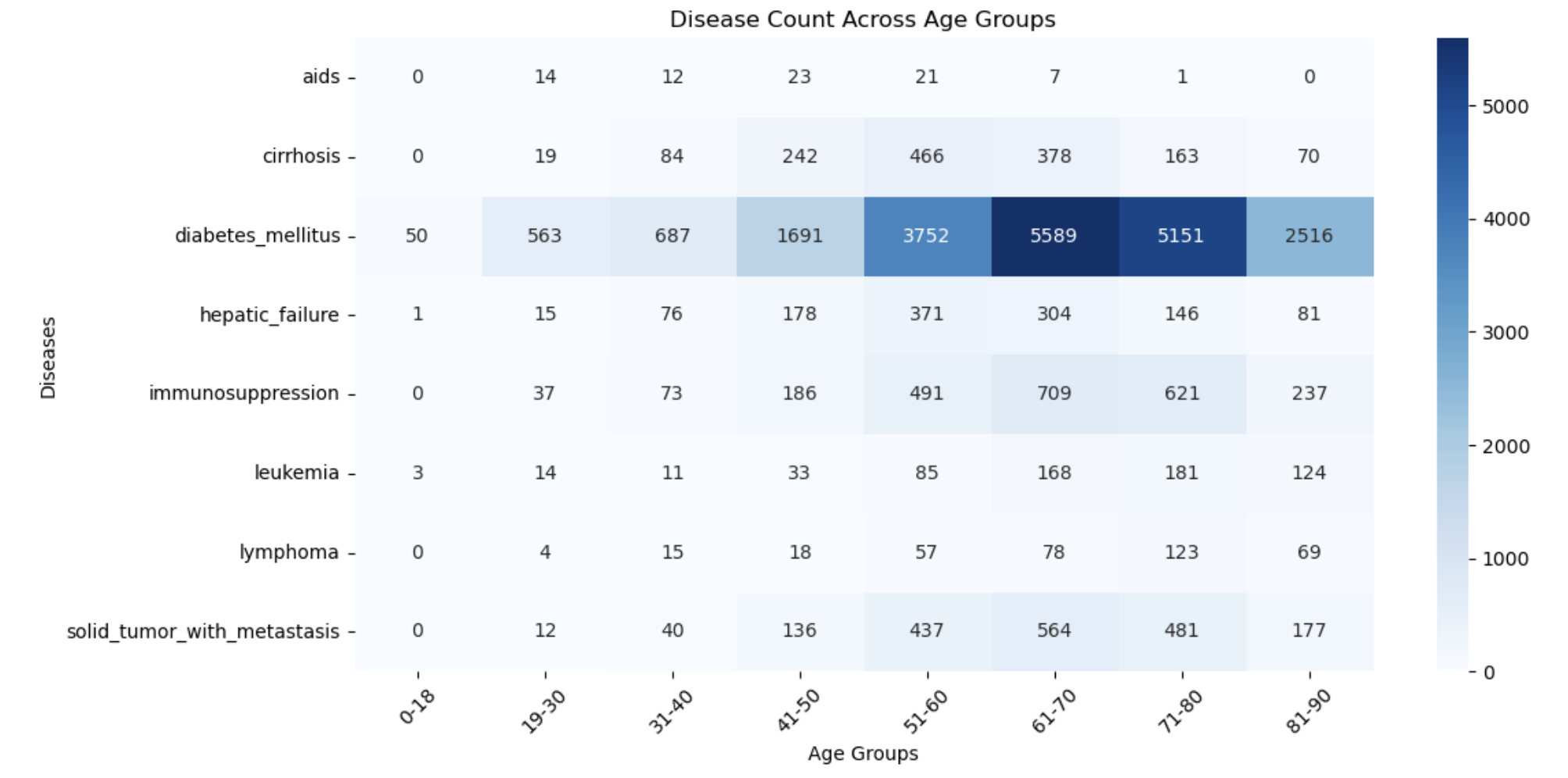
- Visualized graphs to analyze relation between diseases and other factors including age, gender, ethnicity, etc.
- Regression and Classification:
- Predicted mortality rate of patients based on diseases and demographics.
- Classified patients that would face death and those who would not based on the mortality rate. Implemented Random Forest Classifier for the same.
- The random forest classifier gave an accuracy of 92%.
Insights
-
A person with lower than average bmi is at higer risk of dying due to majority diseases than a person with alarmingly high BMI.
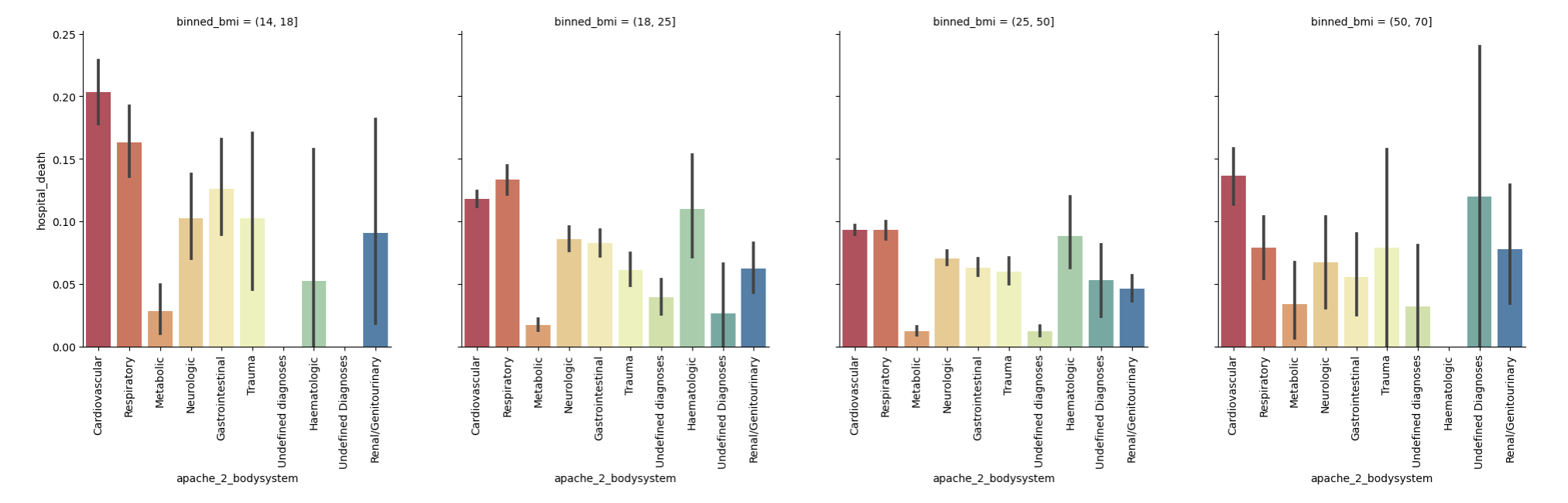
It turns out that people with a slightly lower BMI than what’s considered average actually have a higher risk of various diseases. This goes against the usual belief that only high BMI is a concern. So, it’s important to pay attention to those with a lower BMI, too.People with lower BMI should be assessed continuously to detect cardivascular diseases at an early stage.
-
75.023% people with cardiovascular complications died a panic death where their heart rate was higher than 100 and respiration rate dropped below 12.
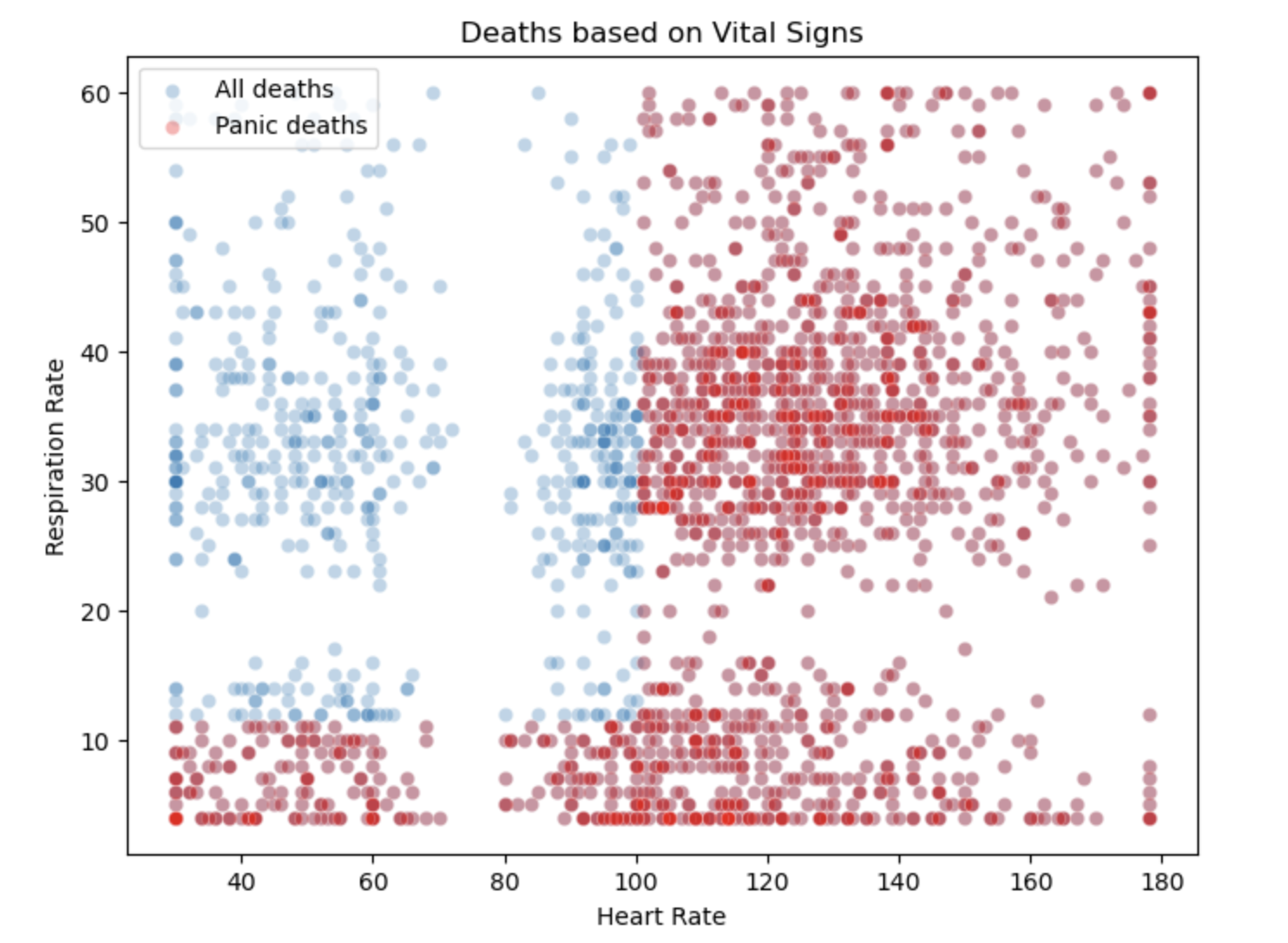
The majority, 75.023%, of individuals experiencing cardiovascular complications faced fatal instances with elevated heart rates surpassing 100, coupled with respiratory rates falling below 12, signaling the critical need for immediate intervention strategies addressing these specific physiological conditions to prevent fatalities.
Skills: Pandas, NumPy, Matplotlib, Seaborn, scikit-learn