Objective
The objective of the “Netflix Database Design” project is to design and implement a robust and efficient database system to manage the vast array of data involved in running a streaming service similar to Netflix. This includes storing and organizing information about users, their viewing habits, content metadata, content availability, billing information, and other relevant data. The primary goal is to create a scalable and optimized database schema that can support the high volume of concurrent users and the massive amount of data associated with a streaming platform like Netflix.
Motivation
The motivation behind the “Netflix Database Design” project stems from the increasing popularity and demand for streaming services globally. As the streaming industry continues to grow, there is a need for robust database solutions to manage the complex data ecosystem involved in delivering content to millions of users worldwide.
Benefits of Netflix Database Design
- Content Management: Netflix database helps manage a vast library of movie and series. It allows for easy categorisation, tagging, and updating of content metadata such as titles, descriptions, genres, and release dates.
- User Management: The database stores user information, including usernames, contact details, and subscription details. It helps in managing user profiles, preferences, and viewing history.
- Recommendation System: By analysing user data, such as viewing history and watch lists, the database can be used for Netflix’s recommendation system.
- Watchlist Management: The database tracks user watchlists, enabling users to save content for later viewing. This feature helps users keep track of content they are interested in.
- Subscription Management: The database manages subscription details, including subscription start and end dates, billing information, and payment methods. It ensures smooth billing and subscription renewals for users.
- Viewing History: By storing viewing history, the database allows users to resume watching from where they left off.
- Device Management: The database tracks devices associated with each user, enabling seamless streaming across multiple devices.
- Analytics and Reporting: The database provides data for analysing user behaviour, content performance, and overall platform usage. This data can be used to make informed decisions about content acquisition, marketing strategies, and platform improvements.
ER Diagram
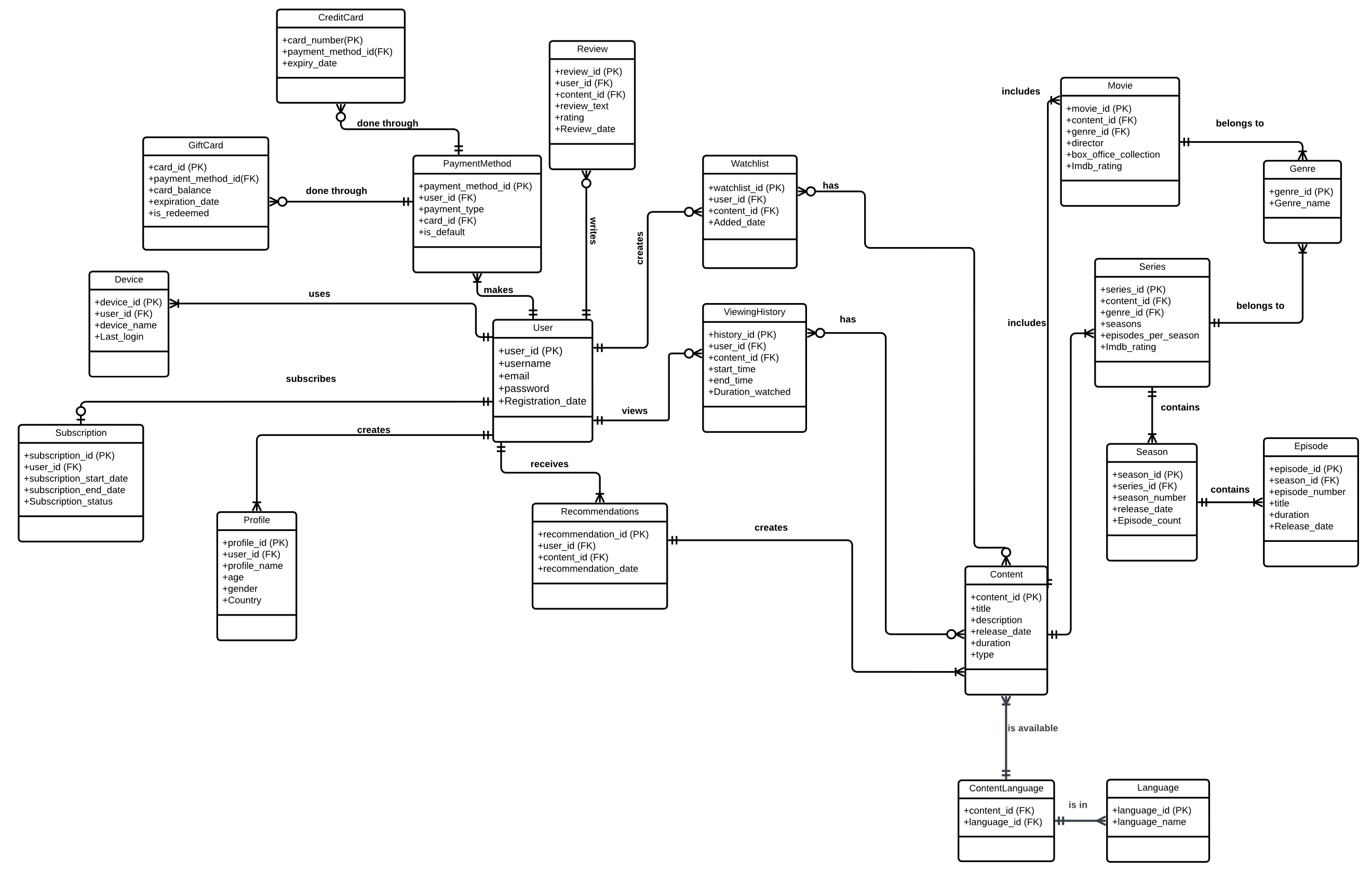
The ER diagram represents the database schema for a Netflix-like platform. It consists of several entities such as User, Profile, Content,Watchlist, ViewingHistory, RecommendationHistory, Device, Subscription, PaymentMethod, Review
The User entity stores information about users, including their username, email, password, and registration date. Each user can have a one-to-many relationship with the Profile entity, which contains additional information such as age, gender, and country. This means a single account is shared among multiple people.
The Content entity represents movies and series available on the platform, with attributes like title, description, release date, and duration, type. Content has one-to-many relationships with the Movie and Series entities, respectively. Each movie or series is also associated with one or more genres, established through a one-to-many relationship with the Genre entity.
The Watchlist entity stores the list of content that users want to watch, so it consists of watchlist id as the primary key, the content that the user wants to watch and the date when it was added. while the ViewingHistory entity keeps track of content that users have already watched. Both have many-to-many relationships with the content and many to one with user entities.
The RecommendationHistory entity tracks recommendations made to users, while the Device entity stores information about the devices users use to access the platform. Both entities have many-to-one relationships with the User entity. Recommendation also has one to many relationship with content
The Subscription entity stores information about user subscriptions, including the start and end dates and the subscription status. Payment methods, such as credit cards and gift cards, are stored in the PaymentMethod, CreditCard, and GiftCard entities, with many-to-one relationships with the User entity.
The Review entity allows users to leave reviews for content, with attributes like review text, rating, and review date. It has many-to-one relationships with the User and Content entities.
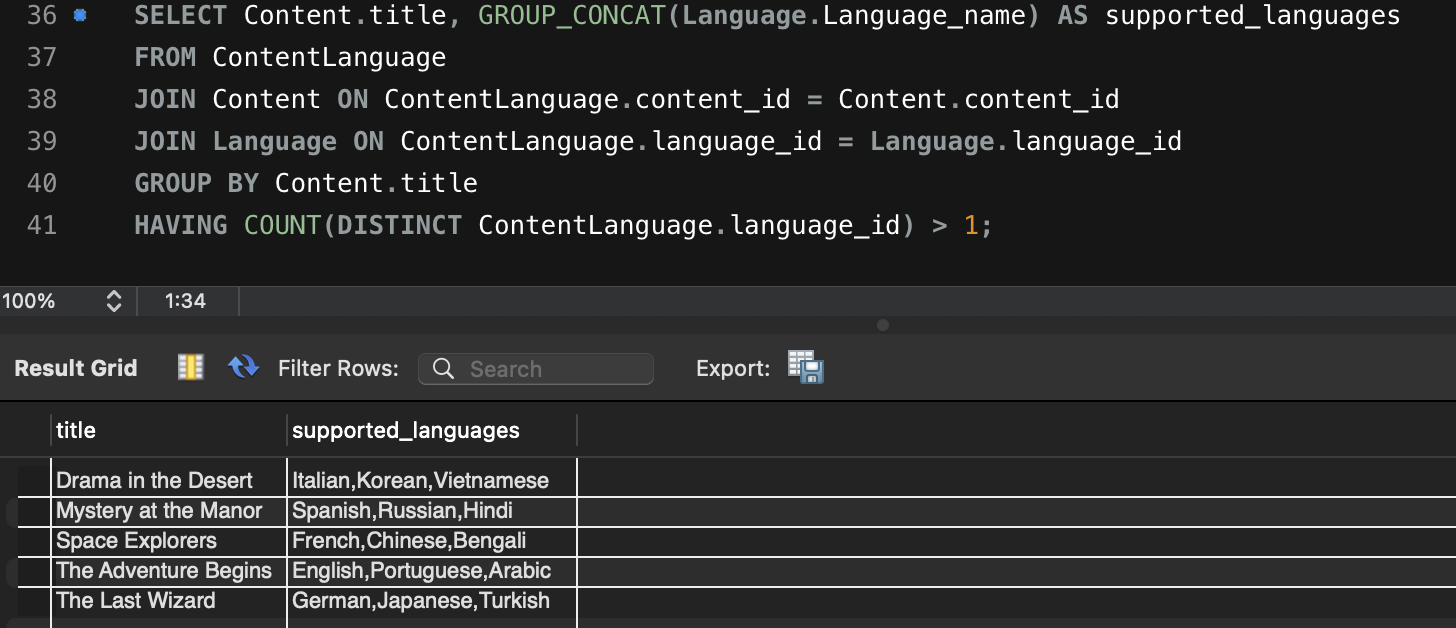
The Language entity stores the languages in which content is available, and the ContentLanguage entity establishes a many-to-many relationship between content and languages.
Implementation
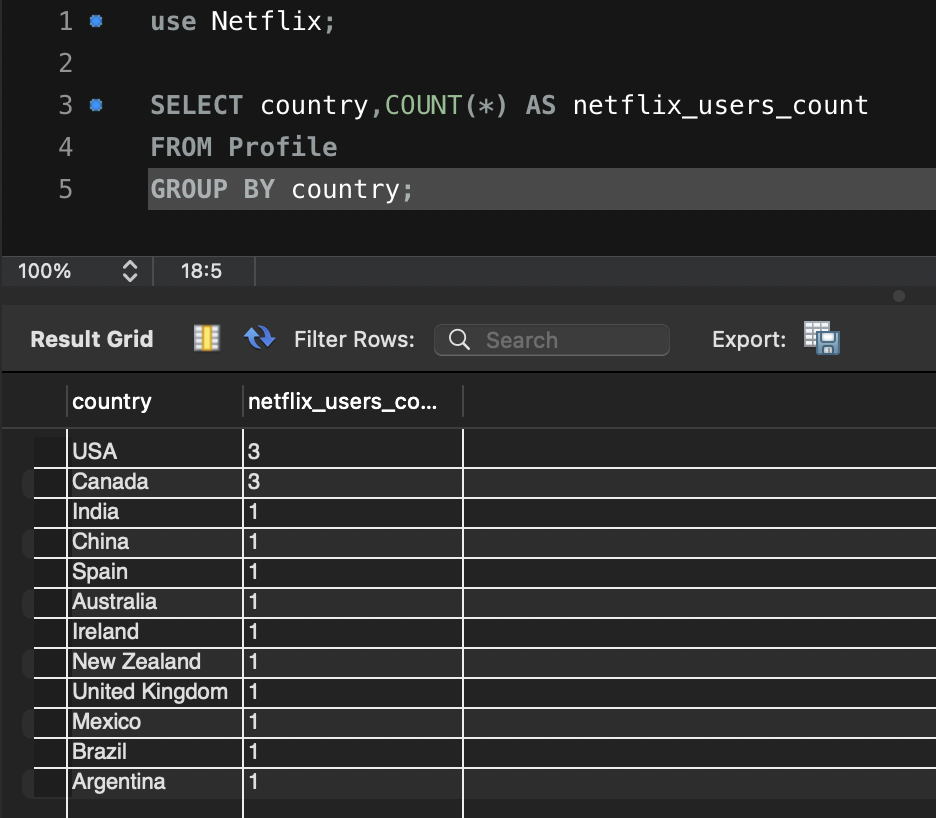
Number of users from various countries:
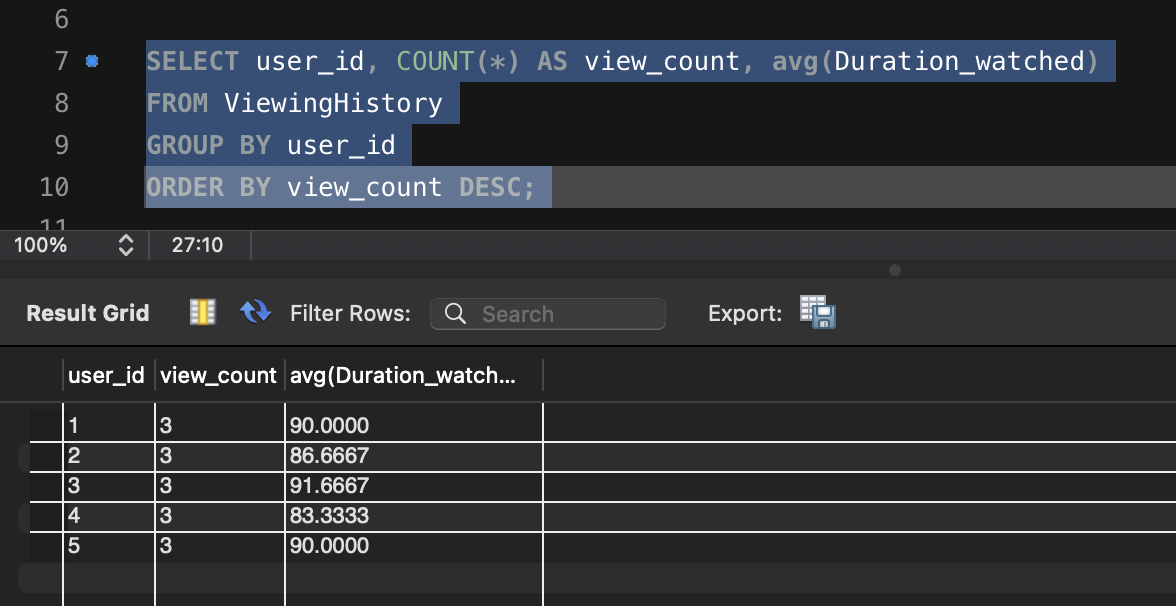
Number of times the user logged in and also their average watch-time:
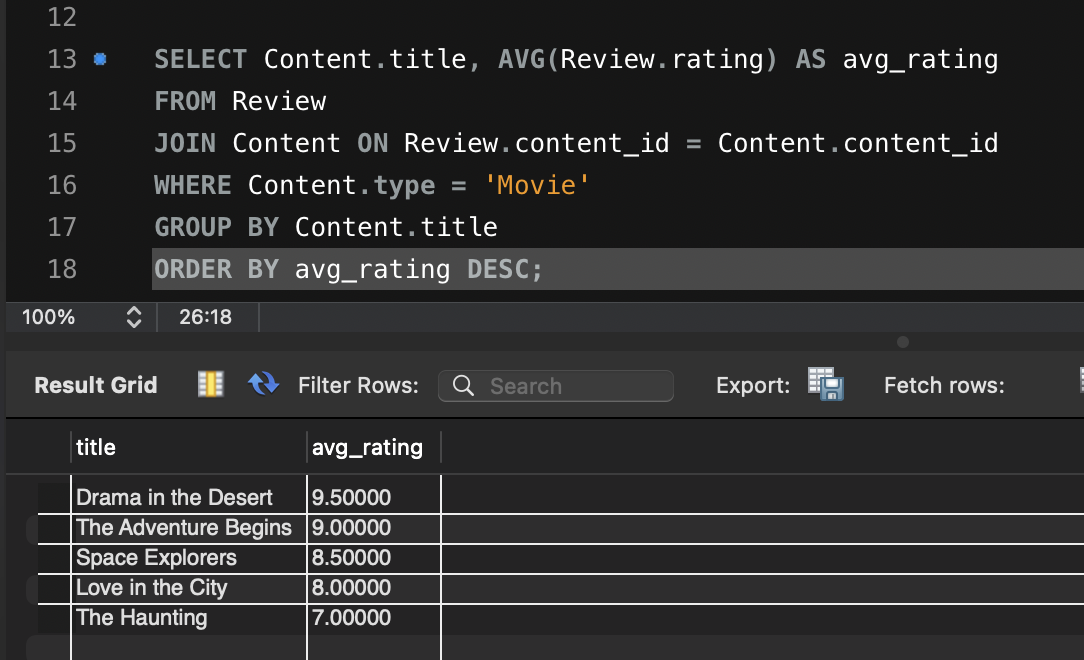
Most popular movies based on rating:
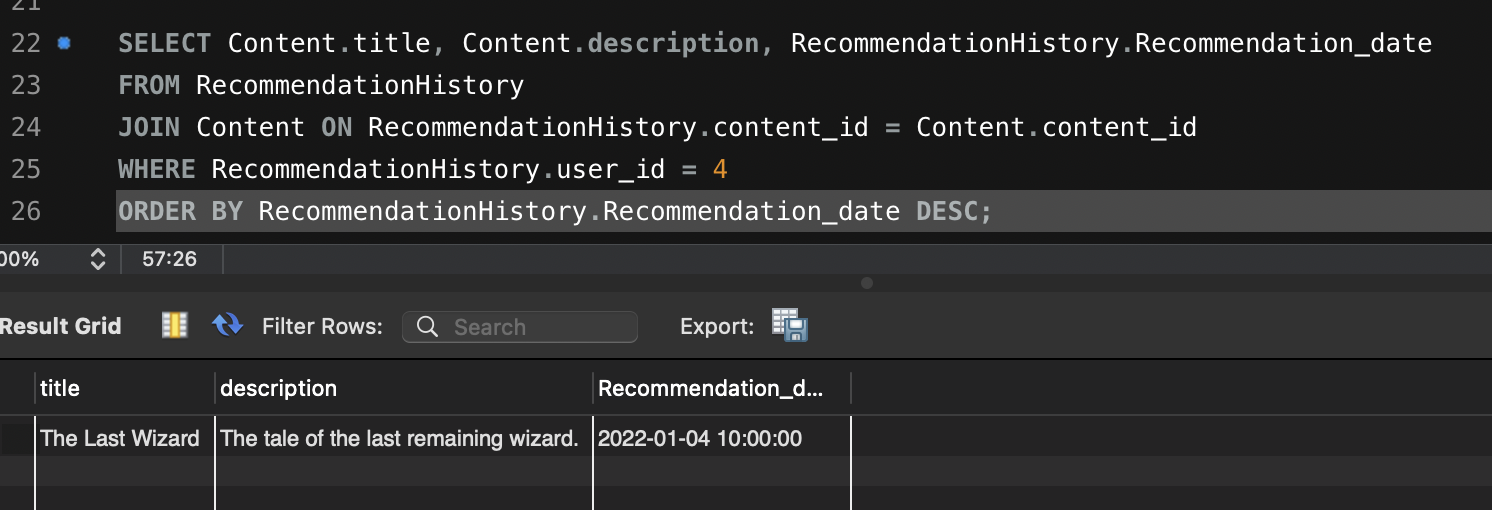
Retrieve personalised content recommendations for a specific user:
Content and its availability in multiple languages: